


Durdle Door
A natural limestone arch rising straight out of the sea, one of the most photographed stretches of coastline in Britain.
Popular things to do
About Durdle Door
Durdle Door is a natural limestone arch, formed when the sea broke through a wall of Portland limestone around 10,000 years ago, on the Jurassic Coast World Heritage Site. Its name comes from the Old English "thirl", to pierce or drill. The arch stands at the eastern end of a long shingle beach below chalk cliffs, and the folded, near-vertical Purbeck Beds are clearly visible from the path down. Looking west along Durdle Door beach, a line of isolated rocks offshore marks where an older coastline once stood — the same process, the Lulworth Estate explains, that will one day turn Lulworth Cove and Stair Hole into bays like this one. The South West Coast Path runs along the clifftop above, linking Durdle Door with Lulworth Cove to the east and climbing west over Swyre Head.
Who visits
You'll mostly find coast path walkers making the clifftop walk from Lulworth Cove and photographers lining up the arch, with fewer swimmers, as the shingle drops steeply into an exposed bay.
Worth knowing
There's nothing on the beach itself: the toilets, kiosks and restaurant are all up at the clifftop car park, which the Lulworth Estate describes as a steep fifteen-minute walk above the beach. Everything you need for the day has to come down that path and its steps, and back up again.
Is Durdle Door dog friendly?
Dogs welcome all year
Dogs allowed all year on Durdle Door Beach and neighbouring Man O' War Beach; keep them on a lead on the cliff path down
Getting there and parking
Address
Parking
Getting on to the beach
Moderate - steep fifteen-minute path down from the clifftop car park, ending in steps.
Nearby places to eat and drink

Swimming conditions and safety
Water quality
Tide and currents
Lifeguards
Hazards
Nearby beaches
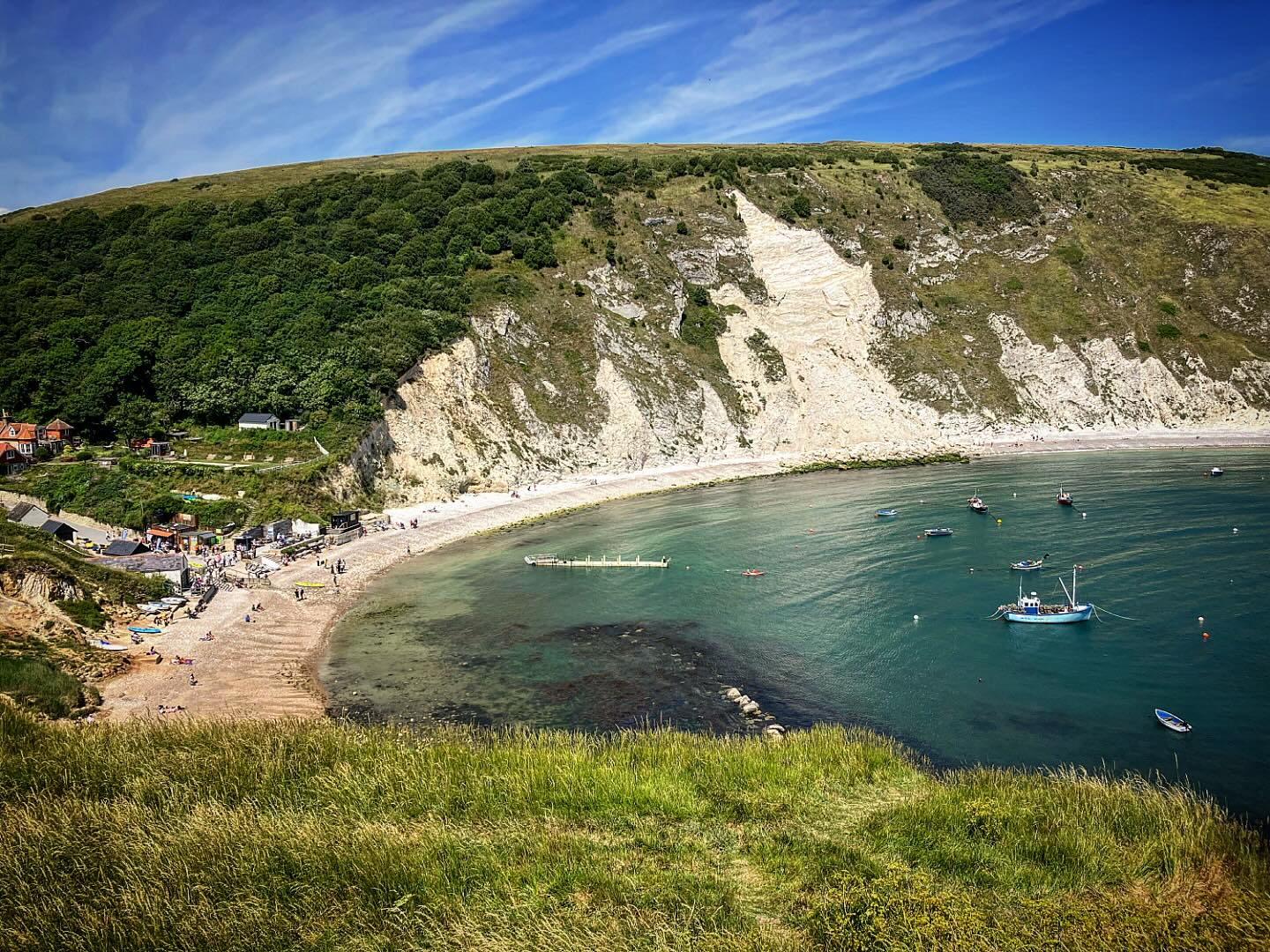
A horseshoe-shaped cove carved into limestone on the Jurassic Coast, one of Britain's most studied examples of coastal geology.